Occasional Buyers are 50% of your revenue. How can your Loyalty Program engage them?
The Point
Most loyalty programs are very good at rewarding customers who already buy frequently.
That is not where the growth is.
Occasional buyers make up most of your customers, but they don’t only purchase less often, they spend less per visit and are less likely to enrol in your program. Yet, collectively, they represent a significant opportunity for growth.
A loyalty strategy focused only on heavy buyers risks becoming a mirror of existing behaviour rather than a tool for expanding it.
A real opportunity lies with the customers who are not paying attention to you most of the time
Situation
Many loyalty programs proudly report that members spend far more than non-members.
Of course they do.
Customers who already favour you are the first to enrol. They purchase more often, spend more per transaction and stay active longer. They are most likely to be heavy buyers in your category, and their behaviour predated the program, so they demonstrate self-selection bias.
Meanwhile, much category demand comes from occasional buyers, the much larger population who move between brands depending on convenience, visibility and circumstance. And marketing science has demonstrated that brands grow by reaching light buyers, not just by extracting more from already loyal customers.
This very common distribution of purchasing frequency has been known at least since 1978 through the published work of Ehrenberg (yes, the Ehrenberg Bass Institute guy). The charts show an example of the Negative Binomial Distribution, the NBD.
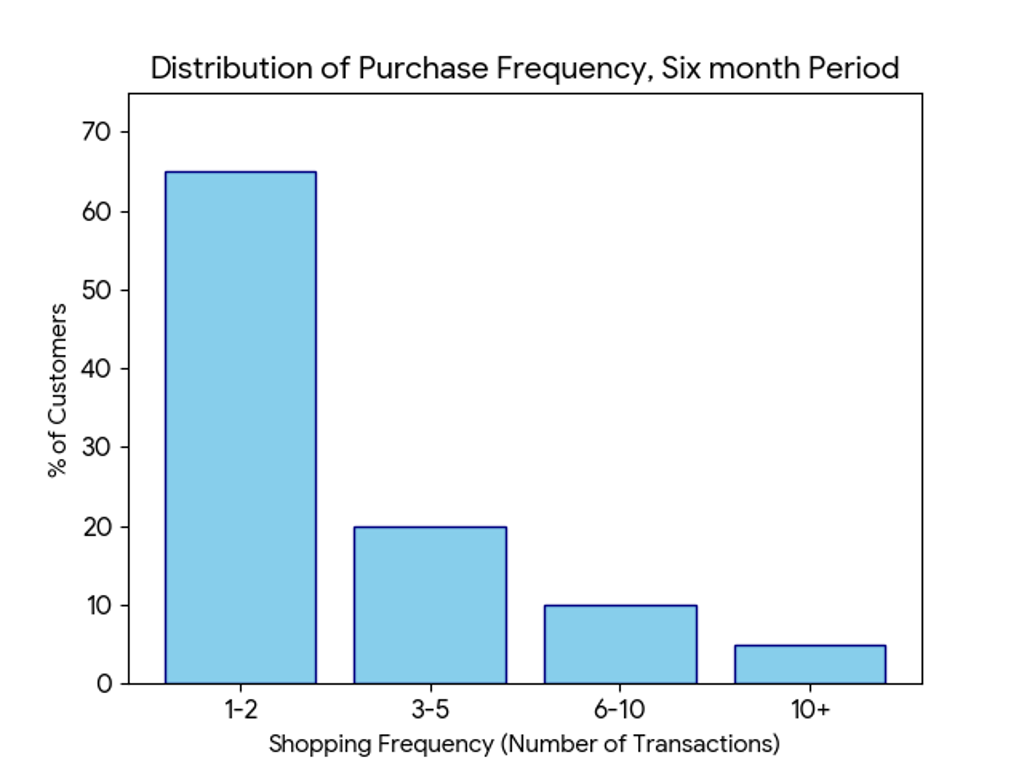
Yet occasional buyers rarely seek out loyalty programs. Their engagement with the brand is intermittent, their purchase intervals are long, and the perceived benefit of joining is unclear. So, programs fill with your best customers while the wider market remains largely untouched.
What This Means
Heavy buyers behave very differently from occasional buyers, and loyalty programs need to reflect this. They already hold a strong mental model of the brand; their behaviour is habitual. Loyalty rewards largely reinforce existing behaviour (and margin). For fans of the classic RFM targeting strategies, note that Recency is a better predictor of purchase than Frequency or Monetary because it selects predominantly heavy buyers who are more likely to have just purchased and are the most likely to buy again, soon.
Occasional buyers operate differently. Their purchases are situational, with brand choice determined by availability, convenience or simple recall at the moment of need.
This creates three structural challenges for loyalty programs looking to attract light buyers as part of their growth strategy.
First, participation barriers are higher. If joining requires downloading an app, remembering a card or navigating a complicated proposition, occasional buyers often decide it is simply not worth the effort.
Second, rewards appear distant. Programs designed around frequent transactions allow heavy buyers to progress quickly, but occasional buyers may see little movement toward a meaningful reward. ‘Taking too long to earn a reward’ is the most common reason given for disengaging from a program, reflecting the predominance of category light buyers in any researched population.
Third, engagement fades between purchases. Long gaps between transactions allow the brand to drift out of the customer’s mental repertoire.
Ellipsis Tips
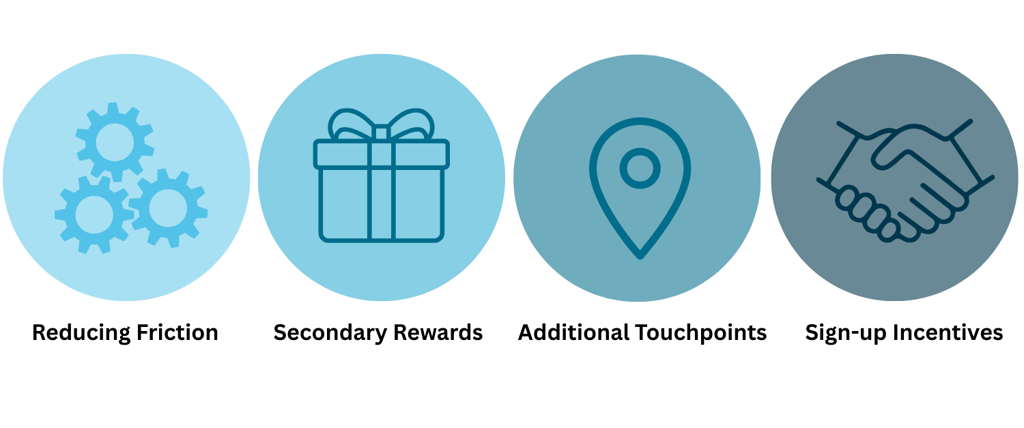 Reducing friction is the priority. Simplifying enrolment and removing transactional barriers expands participation across the broader customer base. Card linking, digital identification and automatic recognition remove the need for deliberate participation. When customers do not need to remember the program, engagement rises naturally.
Secondary rewards also play an important role. Points are transactional, yet they provide an important advantage: flexibility. They allow businesses to reward behaviour incrementally while controlling program cost, and they create visible progress toward future rewards. Accumulation keeps the program present between purchases.
Programs must also introduce additional touchpoints when purchase frequency is low. Partnerships, milestone recognition, progress reminders and occasional surprise rewards all help maintain engagement. Even when purchases are infrequent, program interaction need not be.
Finally, loyalty programs should help attract new buyers, not just retain existing ones. Visible reward propositions and sign-up incentives can increase brand consideration among occasional buyers.
The Qantas Frequent Flyer program is popular, profitable and growing, with an average life of two years for a point (the time between earning a point and exchanging it for a reward). This program successfully engages both heavy and light buyers over extended periods, with no rewards beyond the secondary reinforcement of a growing points balance.
Occasional buyers purchase less frequently, but collectively they account for much of the demand in most categories.
Programs that focus exclusively on heavy users simply reinforce existing behaviour, but the real objective is to ensure, for all customers, that when the next purchase decision occurs, however infrequently, your brand is the easiest to choose. Rewards help influence that decision in your favour.
We are Ellipsis, the Loyalty Experts®.
We help organisations find, understand, measure, manage and grow customer value.
If your loyalty program primarily rewards already loyal customers, it may be time to rethink the design. Talk to Ellipsis.